
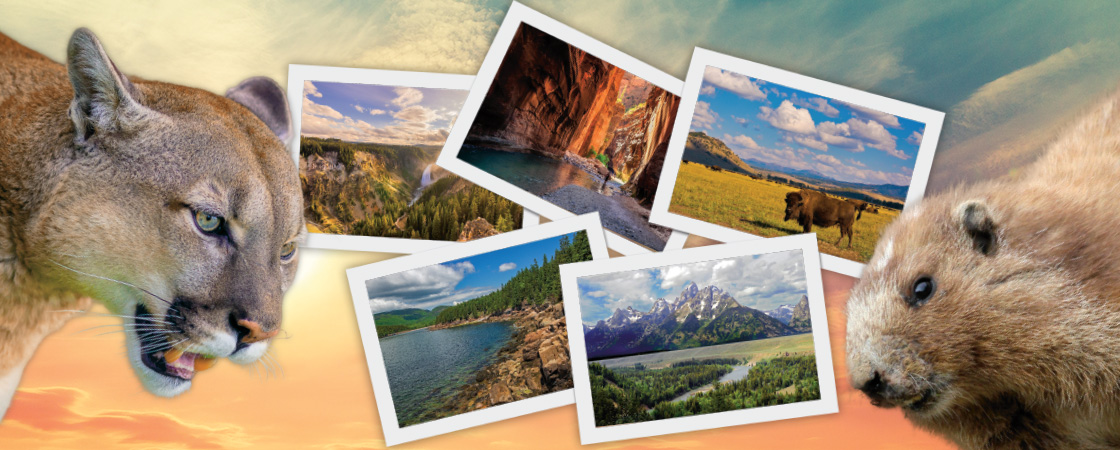
Crystal streams cascading off skyscraper-high cliffs. Bison grazing peacefully in a meadow. Plumes of water spouting from a geyser. Ancient red rock canyons. These are among the breathtaking scenes you might encounter at America’s national parks.
The stunning spaces draw hundreds of millions of visitors every year. That’s a lot of people, and it might seem like the parks are fulfilling their official purpose: to provide protected areas of nature that everyone can enjoy.
The fact is, however, that not everyone can easily access and enjoy national parks. A number of parks charge visitors an entrance fee—and Americans who don’t spend much time in national parks cite cost as a top reason why.
Given that, some wonder: Should national parks be free?
Back to Teacher View
Student View
Shutterstock.com
Should National Parks Be Free?
Some U.S. national parks charge an entrance fee. Would getting rid of these fees help—or hurt—these wild spaces?
By Mary Kate Frank
From the April 2025 Issue
Learning Objective: to read and analyze a text that presents arguments on both sides of a debate, then take a stand

Nature for All
Shutterstock.com
This rare amphibian, the Shenandoah salamander, can be found only in Shenandoah National Park in Virginia.
In the mid-1800s, as the nation expanded, the United States nearly lost many of its natural splendors. Large numbers of Americans were moving west, seeking land and wealth. As more and more people moved, they pushed Native peoples off lands they had lived on and respectfully stewarded for hundreds and often thousands of years. Under the direction of the federal government, Native groups were often forced to relocate, and the lands they once lived on became more and more developed. Mining operations, farms, and railroads began to cover previously unspoiled landscapes.
Conservationists pushed to save the country’s wilderness. In response, the federal government created the first national park, Yellowstone, in 1872. President Theodore Roosevelt doubled the number of national parks, from five to ten, while in office in the early 1900s, championing them as spaces where all people could connect with nature. Yet, starting as early as 1908, some parks began charging visitors a fee.
And some still do today. For a week’s stay, fees at national parks range from $5 to $20 per person, or if you’re driving, up to $35 per car. That may not sound like much, but that’s just for entering a park. Food and lodging inside or near national parks can be expensive. Rates for the hotels in Yellowstone, for example, range from around $100 to $300 per night.
Some people say making all parks free would only be fair. After all, national parks are public spaces created and run by the government. That means they receive money through taxes the government collects from people’s paychecks. In other words, Americans are already sort of paying for the parks. Shouldn’t we get to enjoy these spaces without having to pay even more?
Essential Funds
Shutterstock.com
Everglades National Park in Florida is one of the few places where you might spot the elusive Florida panther.
On the other hand, some say public lands need funds more than ever right now.
Although fees may be preventing some from visiting parks, attendance is nonetheless increasing. There were more than 325 million visits to national parks in 2023—up 4 percent from 2022. More tourists equals more wear and tear on parks’ infrastructure, which means more money needed for maintenance. Indeed, an estimated $23 billion worth of repairs are currently needed on roads, buildings, and other facilities across the National Park System.
“Retaining entrance fees is absolutely essential,” Yellowstone National Park Superintendent Cam Sholly said in an interview with the Property and Environment Research Center. “[When] visitation goes up, that translates to more impact [on the parks].” And by law, most fees collected in a park must be spent on improvements to that park.
Park officials also note that out of more than 400 park sites, only 108 charge visitors. (National park sites include the country’s 63 national parks as well as other protected areas, including monuments and historic sites.) And kids under 16 can go to any park for free with special passes. Parks also offer several free days throughout the year. So there are ways for people to enjoy national parks for free.
But perhaps there’s a compromise to be made? Some have suggested charging international tourists higher prices so Americans can go for free. Others think a “pay what you can” model would be more fair. Another idea would be to ditch fees for first-time visitors. That way everyone could have a better chance of experiencing each park at least once in their life.
After all, witnessing the magic of these places in person—getting to hear that rush of water as it careens down that cliff or to feel those ancient red rocks under your feet—inspires people to want to protect these wild places. And that is key to their future.
What does your class think?
Should all national parks be free?
Should all national parks be free?
Should all national parks be free?
0%
0votes
{{result.answer}}
Total Votes: 0
This article was originally published in the April 2025 issue.
Audio
()
Activities
(7)
Preparing to Read
Reading and Discussing
Reference
Skill-Building Activities
Answer Key
(1)
Audio
()
Activities
(7)
Preparing to Read
Reading and Discussing
Reference
Skill-Building Activities
Answer Key
(1)
Step-by-Step Lesson Plan
Close Reading, Critical Thinking, Skill Building
1. Prepare to Read
(5 minutes)
Preview Vocabulary (5 minutes)
Project the Google Slides version of Vocabulary: Definitions and Practice on your whiteboard. Review the definitions and complete the activity as a class. Highlighted words: conservationists, infrastructure, stewarded. Audio pronunciations of the words and a read-aloud of the definitions are embedded on the slides. Optionally, print the PDF version or share the slideshow link directly to your LMS and have students preview the words and complete the activity independently before class.
2. Read and Discuss
(45 minutes)
Read the article once as a class. Optionally, for students’ first read, have them follow along as they listen to the audio read-aloud, located in the Resources tab in Teacher View and at the top of the story page in Student View. Then have students silently reread the article to themselves.
Have students fill in the “Yes/No” chart in their magazines based on the details they identified in the text. Sample responses:
YES:
National parks were created to be spaces where all people could connect with nature, but charging fees makes it hard for some people to visit them. Making parks free would allow more people to enjoy and experience them, especially those who can’t afford entrance fees.
Even if entrance fees are not high, they add to the other, often high expenses that can come along with visiting national parks, including lodging and food costs.
National parks are funded by taxes, so Americans are already paying for them.
Removing fees could motivate more people to visit parks, and connecting with nature firsthand in the parks helps inspire people to care about these places and want to protect them.
NO:
National parks need funds for maintenance. (Answer provided.)
Visitation to national parks has increased recently, and more visitors leads to more wear and tear on parks, making entrance fees more essential than ever.
Many national parks and national park sites do not charge entrance fees; it is only some that do.
There are already ways to visit parks for free, such as free days and special passes for kids under 16.
Discuss: Which supporting details do you think are the strongest? The weakest? Do you think the writer shows bias—that is, a preference for one side of the debate or the other? Explain and support your answer with text evidence.
3. Write About It: What Do You Think?
(45 minutes)
Have students work individually to complete the Essay Kit, a guided writing activity and outline that will help them write their own argument essay in response to this question:
Should all national parks be free?
Students can use the Transitions and Argument Essay Checklist anchor charts and the Argument Writing Rubric to help them edit and evaluate their essays.
Text-to-Speech